



Teacher Feedback from Chris Powell at Parmiter's School
Chris from Parmiter's School kindly shared some thoughts following his recent trip to the French Alps;
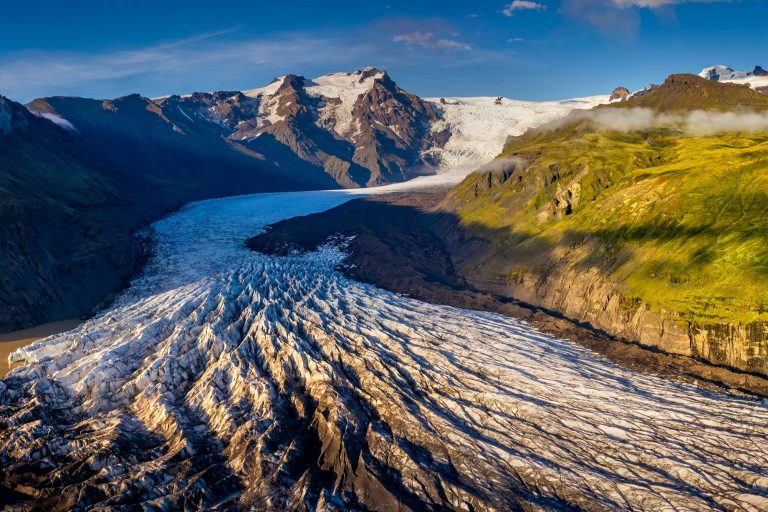
"Until you see a glacier in the alpine environment it is very difficult to comprehend or communicate the power and size of the ice. The landforms and landscape that remain, truly reflect the ability of a glacier to entirely change the shape of our environment. Without taking students to such a place it would be very difficult to impress upon them how ice, something that appears so stationary and placid, could have been the dominant force behind the relief of much of Europe and Great Britain."
Thanks Chris, we are looking forward to working with you on next year's adventure!
Posted on July 20, 2012 in French Alps , Geography , Geology , glaciers , Study Trips , Travel Stories | Permalink | Comments (0) | E-mail this
The French Alps with Parmiter's School and Discover the World
Discover the World’s Kat accompanied Parmiters School on their recent visit to the French Alps; this is what she has to say about the experience:
You never know what you’re going to need when you are heading to the mountains, the weather can change so quickly and with such unusual weather patterns here in the UK I thought I’d better be prepared for any eventuality. Into my backpack went my ‘all weather gear’; my down jacket, my full waterproofs... little did I know I wouldn’t be needing them!
We all set off in our Tees Valley Coach last Friday afternoon and headed towards Dover, arriving just in time to see the sea impersonating a mill pond in the twilight of the evening. It was a blessing to experience a calm Channel crossing and the rest of the journey to Chamonix followed suit. We arrived at lunch time and were enthusiastically greeted by our local agent who, to everyone’s delight was brandishing several large paper bags containing our lunches. With these safely installed in our day bags, we hopped on the Montenvers Railway and enjoyed the scenic ride up to the Mer de Glace.
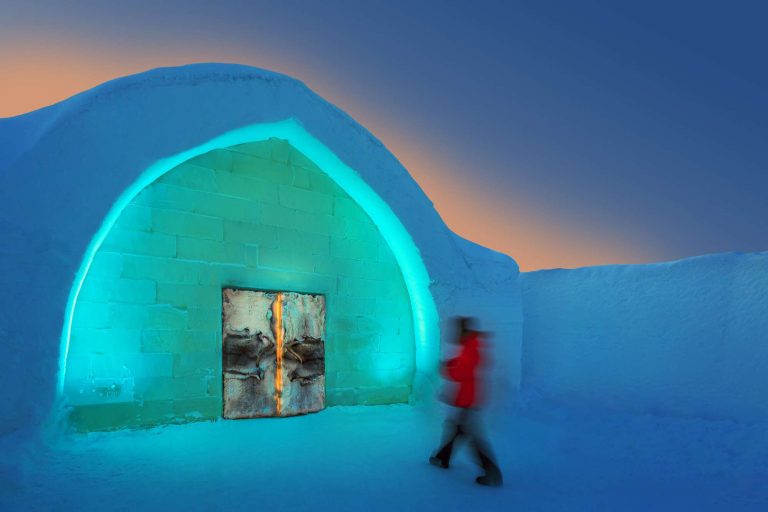
Not entirely sure what to expect from a man-made ice cave in the “sea of ice”, I tentatively stepped inside the dribbling entrance where I was instantly aware of a significant temperature drop relative to the lovely sunny day outside. The blue ice passageway meandered its way further into the heart of the glacier before opening up into a network of rooms with display boards and figurines – an ice museum! After having a thoroughly good time exploring the slow shutter speed setting on my camera in the strangely-lit and reflective environment, I made my way back outside to where the sun was waiting for me. Back at the train station, I sat in the sun while the remainder of the group made their way back up the steps and small gondola from the cave, taking in the breath-taking scenery and watching as intrepid crampon-wearing, ice axe wielding mountaineers poured in and out of the station barriers.
Our second day in France was the one that we’d all been waiting for – a glaciology lesson with Mr Sylvain Coutterand, co-author of the book “Glaciers : Mémoire de la planète”. Sylvain was to accompany us on a vigorous hike from the Chamonix Valley up to the base of the Bossons Glacier. This was the only point during our five day trip that we saw rain and probably the only time we wanted to – it was very refreshing! “Glacier des Bossons” is the highest glacier in the Alps with its highest point equal to that of the summit of Mont Blanc itself (4807m). In 1900’s the glacier reached all the way to the Chamonix valley bottom at 1050m but today the terminus is at an elevation of approximately 2315m – it’s frightening to comprehend the speed of its recession. Once the group were nestled comfortably on or between rocks at the base of the immense ice field Sylvain began to deliver an illustrated lesson on glacial behaviour and valley formation. Feeling well informed from his lesson, we carefully picked our way back down the windy path towards Chamonix in search of a suitable picnic spot.
Our next activity for the day was summer sledging. It’s okay, we had no idea what to expect from this either! If you can imagine a mountain-side roller-coaster on a smaller and simpler scale you are more or less picturing summer sledging. The activity begins at the base of what in the winter is presumably a ski slope, judging by the drag lift that runs up the side. Next to the drag lift is a similar looking lift base with modified sledges intermittently appearing into view as they catch onto the tow that pulls them up the rails and out of the station. Each sledge mounts two riders and the rear rider is in control of the braking system. After the gentle tow up several elevations, from which one can inspect the rail-route back down which twists and curls at some alarming angles, we reached the top, heard the sledge automatically disconnect from its tow and we were off! The ride was exhilarating! I’m sure it defies the laws of physics – the rate at which we hurtled around the curves of the rails I was sure we would come off! Tears in our eyes and smiles on our faces, we jumped back in the queue for another go. Again, and again!
On our fourth day, we took some time out from the intense geography study of previous days to go mountain biking. I have always wondered what happens to the ski lift system when the snow melts and now I know. Gondolas are very clever pieces of engineering, not only do they turn corners, travel over pylons effortlessly and never lose their seemingly precarious balance on the wire cables that carry them to higher altitudes but they also carry mountain bikes on their outside ski racks! I watched, fascinated as each of the new, high-specification mountain bikes was loaded onto a gondola which was subsequently filled with students before disappearing up the mountainside. At the top of telecabine de jaillette is a lovely soft grassy expanse which is just perfect for those new to, or those who were never very good with, mountain bikes to practise our skills. Huge thanks to Alex and his team of expert instructors who skilfully led our mixed experience group down the mountain trail towards Megeve. Despite a few tricky spots where we were guided one by one by an instructor, the trail was gentle and surrounded by lush new summer grass and spring Alpine flowers with an occasional break in the trees to afford us a spectacular view of Europe’s highest peak, Mont Blanc. A look around Megeve and a dip in the Combleux ecological lake rounded up another fantastic and sunny day in the French Alps.
You could argue that we left the best until last – our final full day in the Alps was to be dedicated to our highest ascent, to the very top of the Aiguille de Midi. The Aiguille du Midi (3,842 m) is a mountain in the Mont Blanc massif in the French Alps. The telecabine de l'Aiguille du Midi that takes tourists to the summit was built in 1955 and held the title of the world's highest cable car for about two decades. It still holds the record as the highest vertical ascent cable car in the world, from 1,035m to 3,842m. The temperature difference between the valley and the summit was about 25 degrees Celsius! The exploration that followed was superb; various viewing platforms at different levels give way to indescribable views across the rest of the Alps. We made our way back down towards the mid station of the cable car for a hike to a lake where we had lunch in much more appealing temperatures! The area around the mid station of telecabine de l'Aiguille provides many hiking opportunities for all levels of walker – including some more technical snow routes frequented by keen mountaineers roped together in a line. It was very near here that tragedy struck on the early hours of Thursday morning when an avalanche killed nine experienced mountaineers. Our thoughts are with the friends and families of those who lost their lives last week.
As the news broke early on Thursday morning in Chamonix, we were back on our coach heading out of the mountains and back towards Calais. We had a superb trip and would like to thank our lovely coach drivers for their faultless driving. I would also like to thank the staff and students at Parmitters School for welcoming me along on their trip, not complaining at my photographing every aspect of it and for helping me to enjoy such a fabulous tour. Same time next year?!
For more information on this tour please contact us.
Posted on July 17, 2012 in Geography , Geology , glaciers , Study Trips | Permalink | Comments (0) | E-mail this
Ten reasons to visit Costa Rica during the 'Green Season'
In light of the news that we are expecting an El Niño season, Costa Rica Product Manager Kat gives us ten reasons to experience Costa Rica during the 'Green Season'.
When we speak of Costa Rica’s ‘green season’ we refer to the wettest months in the majority of the country which are from May to November. The idea of travelling during a wet season may sound discouraging for some, but we would like to share with you the highlights of green season travel and why 2012 might just be the best time to do it…
10 – Allow me to dispel a myth The rainy season doesn’t mean it rains constantly; it may rain a lot but there will also be plenty of sunshine between the downpours that tend to arrive in the late afternoons and early evening. In August to November the rain becomes more frequent and more prolonged. Sounds a bit like the summer that we’re currently enjoying!
09 - White water! One of Costa Rica’s most popular adventures is rafting, and you can take your pick from a number of fast flowing rivers. Needless to say, during the rainy months the water levels are higher and the flow faster - there is no better time to enjoy riding the rapids!
08 - Better visibility Volcano Arenal in particular is well known to be shrouded in cloud most of the time. During the wet season the rains carry the fog and haze away, making volcano viewing across the country particularly enjoyable.
07 - The flora flourishes! When the rain falls the rainforests are rejuvenated; the trees and plants enjoy growth surges and turn their most luscious shades of green.
06 - Humpback Whale Season in the south Pacific Costa Rica celebrates the longest humpback whale season in the world! Whales migrating from both hemispheres pass by Costa Rica and the humpback whale migration in particular is one of the most remarkable journeys made by any creature on the planet. These immense cetaceans travel further than any other species of whale to reach their breeding grounds. Being one of the biggest creatures known to science, spotting one majestically navigating the Pacific Ocean is an experience you will never forget! The season runs from August to November and is best enjoyed from the Osa Peninsula, Dominical or even Manuel Antonio. Our itineraries Costa Rica Expedition and Highlights of Costa Rica include these locations.
05 - Leatherback nesting season in the central Caribbean The Leatherback Turtle (dermochelys coriacea) is the critically-endangered giant of the turtle world and it is this species which is the main object of our turtle conservation itineraries. It can have an overall length of over two metres and an adult may weigh from a hefty 350 to 700 kilos. Leatherbacks nest on tropical beaches but can cross the Arctic Circle in search of food. They are the world’s champion divers; the deepest recorded depth is 1.2 kilometres, slightly more than the deepest known dive of a sperm whale. March to June is the nesting season for these giant turtles and after a 60 day incubation period the eggs hatch and the baby turtles promptly embark on the perilous journey to the sea by moonlight. Witness this awe-inspiring spectacle by visiting the Pacuare Reserve on one of our Costa Rican itineraries.
04 - Beat the crowds The idea of going on holiday to a place where it rains puts many people off, which means you can expect fewer travellers touring the country during the green season period.
03 - Best value for money As a result of there being fewer tourists, the general prices for accommodations and practically every aspect of tourism are less than in peak travel season, offering your group excellent value for money.
02 - More wildlife Let’s be honest, if you plan a trip to one of the most bio-diverse countries in the world you are probably a wildlife junkie. (It’s okay – so are we!). Good news, the greener foliage and plant life during the rainy months offer a wider range of feeding grounds for the animals, plus, with fewer tourists the animals are more relaxed in their habitat and much easier to spot. So get your camera ready…!
01 - The El Niño climate pattern has been expected to build in 2012 Read all about El Niño in the article published by the Tico Times today.The pattern suggests that the usual green season months in 2012 will be warmer and less rainy than usual making this year potentially the best time to visit Costa Rica during our UK summer months. What’s more, with an increased risk of rainfall in the Caribbean there are ample opportunities to see how the hazards of living in a tropical country are managed. See landslide barriers being erected and learn how frequent road closures protect people from the potential danger during heavy rain.
If managing natural hazards is part of your curriculum, I think I’ve just found 11 reasons why you should visit Costa Rica in 2012!
For more information contact us.
Posted on July 13, 2012 in Conservation , Costa Rica , Geography , Science , Study Trips , Volcanoes , Wildlife | Permalink | Comments (0) | E-mail this
Arni's Big Idea - find out how Kate Humble explored Iceland's Thrihnukagigur volcano
If you're wondering how on Earth those clever Icelanders managed to lower Kate Humble and the BBC Volcano LIVE's film crew down into an Icelandic volcano (as seen on last night's programme), here's how:
The idea is the brainchild of Árni B. Stefánsson, a veteran cave expeditioner, doctor and (as of 2004 when he had the 'lightbulb' moment) an entrepreneur. Árni has written many articles and presented numerous times on the subject of how best to preserve caves, and in particular Thrihnukagigur volcano. You can take a look at his very comprehensive and well-thought out presentations on his website.
How did Kate Humble get inside the volcano?
Kate was lowered down into the crater’s opening via a open elevator system that usually carries skyscraper window cleaners! The 'basket' can carry 5-6 people, and is connected to a crane that hovers over the crater opening. Thick cables act as a pulley system, lifting and lowering the basket through the bottle-shaped vault. Safety equipment is a must; harnesses and helmets are compulsory and Kate and the film crew were supervised by expert mountain guides and cave explorers, who are present at all times. The journey into the magma chamber takes around 10 minutes, and the basket descends 120m/400 ft into the depths of the volcano.
What it's all about:
Arni has planned to build a ground tunnel from the surface into the magma chamber. Take a look at the below video. The whole idea is testimony to the brilliant 'we can do it' attitude of the Icelanders!
Posted on July 12, 2012 in Geography , Geology , Iceland , Study Trips , Travel Stories , Volcanoes | Permalink | Comments (0) | E-mail this
BBC2 Volcano LIVE visits Iceland's Westman Islands
Wow - another fantastic BBC2 Volcano LIVE programme last night! The Beeb have hit on another winning combination with Kate Humble and Prof Iain Stewart reporting from Hawaii. We've all been really enjoying the series so far - what a great (and accessible) way to fire up people's imagination and interest in volcanoes. The images of the lava lake in the Congo on last night's programme were particularly impressive...
It was great to see Iceland's Heimaey featured. The archipelago of islands, of which Heimaey is the largest, is just a half hour ferry ride from the mainland. It's a popular destination for our school trips visiting South Iceland, although we usually have a Plan B in place, as the operation of the ferry is subject to weather and sea bed conditions. However, for those who do visit Heimaey, it's a fascinating place for students to discover for themselves the landscape that was so dramatically changed in 1973.
Students can walk through the area which shows why this island is called the 'Pompeii of the North', which Kate Humble also walked through on last night's programme.
Watch a video from the Visit Westman Islands Tourist Board here:
Photographs featured on this blog are of Lady Eleanor Holles School's visit to Heimaey in April 2012 with Discover the World. We hope that the students are enjoying reliving their Iceland adventures via Volcano LIVE! If you're interested in including the Westman Islands on a study trip itinerary to Iceland, please do get in touch with our specialist schools team.
Posted on July 11, 2012 in Geography , Geology , Iceland , Science , Study Trips , Volcanoes , Volcanos | Permalink | Comments (0) | E-mail this
BBC2 Volcano LIVE with Kate Humble and Prof Iain Stewart
We're over the moon that the BBC has chosen to take its format for the ever-popular Spring and Autumn Watch programmes, and apply it to the intriguing subject of volcanoes! We all thoroughly enjoyed last night's BBC Volcano LIVE programme (all this week, BBC2 at 8pm, to Thurs 12 July 2012). If you missed it, you can play catch-up for a limited time on BBC iPlayer. For a preview of forthcoming programmes (as of today, Tues 10 July), click here.
Don't miss out on the added bonuses that are available on the programme's website, including photographs, volcano webcams and interviews. You and your students might like to visit the Volcano LIVE chat webpage, where you can take a sneak peek at behind the scenes photography, email questions to the experts and take part in live chat. The Volcano Live Extras page is a treasure-trove for Geographers, including a Producer's blog, experts explaining what it's like to be a volcanologist, a guide to volcano themed walks in the British Isles, and animated guides about how volcanoes work.
If you and your students have been inspired by the Beeb's latest offering, then you'll want to take a look at the Eyjafjallajokull Study Aid, which is a free online classroom resource, focusing on Iceland's infamous volcano, as featured in Volcano LIVE. You'll find material for use in your lessons, with an educational focus, directly related to the KS3, GCSE and A-Level syllabus, including Powerpoints, an extensive image and video library, lesson plans, worksheets, maps and diagrams.
The Schools Team is rushing home to watch the second programme - we can't wait! Pop quiz tomorrow over a morning coffee...
Posted on July 10, 2012 in Geography , Geology , Iceland , Science , Study Trips , Volcanoes , Volcanos | Permalink | Comments (0) | E-mail this
Higgs boson-like particle discovery: CERN School Trip Visit, July 2012
With the buzz around today's announcement from CERN (the European Organization for Nuclear Research), Sue at Discover the World is particularly excited to learn about this huge step in the world of science. She has just returned from a visit to the facility a couple of days ago! What's more, Parliament Hill School are travelling out to CERN today with Discover the World - fantastic timing!
As reported on the BBC's Science & Environment website, CERN scientists reporting from the Large Hadron Collider (LHC) have claimed the discovery of a new particle consistent with the Higgs boson. Watch the webcast here on CERN's website.
Scientists have been searching for an explanation of how matter attains its mass, with the search for the Higgs boson particle - a quest that has lasted for an incredible 45 years. This morning they told the world of how they appear to have finally cracked this mystery; both of the Higgs boson-hunting experiments at the LHC have finally reached a level of certainty in their data worthy of a "discovery". The scientists say that further work is however needed to conclude for sure that what they have discovered is a Higgs.
Professor Joe Incandela, CMS Spokesman, told reporters, 'We're reaching into the fabric of the Universe at a level we've never done before”.
Sue Monkton, who looks after our CERN School Visits here at Discover the World, was on a fact finding visit to the centre at the beginning of this month. Student groups can travel out to Geneva and visit CERN from as little as £249 per student, for a 2-night trip (breakfast basis, including flights). Groups are based at Geneva Youth Hostel; a clean, comfortable, friendly and well-organised accommodation option, according to Sue. The hostel is within easy reach from Geneva Airport (a short train ride into Geneva Central Railway Station, then either a 10 mins walk or a couple of tram stops away), or transfers can be arranged for larger groups. From the hostel, it's a short walk back to the main railway station, then a 20-25 tram ride to CERN. Using the excellent Swiss local transport is convenient, and keeps costs down.
The buildings at CERN are dotted around, and are located right on the Swiss-French border (meaning that to access some areas, you need to bring your passport with you!). The huge 'Globe of Science and Innovation' dominates the complex - the emblem for sustainable development for all, as well as the departure point for visits of the Laboratory and being at the heart of CERN's science in society project. On the ground floor of the Globe, there is another permanent exhibition; the 'Universe of Particules' takes students on a journey deep into the world of particles and back to the Big Bang.
School groups are treated differently from individual visitors. Groups are booked by Discover the World onto a special (complimentary) tour which lasts about 3 hours and comprises an introduction followed by a film, a visit to one of the experiments and to an accelerator located at the surface. Tours are in high demand, and must be booked at least 4-6 months in advance (or sometimes up to a year in advance). The guided tour is conducted by a scientist, and of course there is a plethora of information available in terms of videos and displays.
With interest in the amazing European Centre for Nuclear Science at it's peak, now is a great time to visit CERN in Geneva with a school group. Do get in touch with our Schools Team if you'd like to discuss a visit. We're looking forward to hearing back from Parliament Hill School, who are actually visiting CERN tomorrow, 5 July. What perfect timing for them on what's sure to be a particularly poignant and well-timed school trip.
Posted on July 4, 2012 in Science , Study Trips , Switzerland (CERN) , Travel Stories | Permalink | Comments (0) | E-mail this
THE OUTSTANDING GEOGRAPHY STUDENT AWARD - NORWAY TRIP PRIZE
Discover the World have teamed up with the WorldWise strand of the Geographical Association to offer your students an outstanding opportunity. In September 2012 we will be announcing details of an exciting new annual award; aimed at Y9/10/11 students. Enter your students’ essays, relevant to their studies, into this national competition, and be in with the chance of winning five places on an incredible Norway study trip for your school. The winning school and student will also receive a GA certificate to be announced at the GA annual conference in April 2013.
To enter students can submit an essay answering one of the questions provided. Essay questions will be relevant to DTW study aids and the various syllabuses helping to facilitate student learning. At the time of the launch there will be three Discover the World study aids:
1. Eyjafjallajokull volcano, Iceland.
2. Solheimajokull glacier, Iceland.
In addition, in no more than 200 words, students are to explain why they should win the award, how they will benefit from the experience and how they will use geography in their later life.
The competition is designed to:
- help promote geography as an exciting subject.
- incentivise students to write an essay,
relevant to their studies, whilst facilitating their learning.
- encourage students to study geography post GCSE.
- help aid teachers when promoting their subject
at options.
- recognise outstanding geography students.
To be kept up to date with developments, if you haven’t done so already make sure you register to Discover the World's free award winning study aid: www.schools-discover.co.uk/studyaid
Posted on July 3, 2012 in Geography , Geology , glaciers , Norway , Science , Study Trips , Travel Stories , Waterfalls | Permalink | Comments (0) | E-mail this
Pacuare Reserve, Sea Turtle Project: Costa Rica School Trips
Having spent time living by the 'Pura Vida' mantra in Costa Rica, Discover the World's Kat Hardman is passionate about preserving the wildlife in this amazing country:
We are delighted to see our friends at the Pacuare Reserve hit the headlines this week in America!
Washington Times Article - The Pacuare Sea Turtle Project: Saving the leatherback in Costa Rica.
Our involvement with the project, which is included on our schools Costa Rica itineraries, all began with a telephone call from a polite English gentleman who knew Discover the World by reputation and wanted to work with us. At that stage I had no idea that this would mark the beginning of an important relationship between ourselves the tour operator, and an English owned charity-funded foundation that runs one of the most significant conservation efforts in Costa Rica. We are really proud to support this excellent cause.
The Pacuare Reserve is a base on the central Caribbean Coast of Costa Rica that provides protection for nesting sea turtles, particularly the endangered Leatherback turtle whose population has diminished over the last decade due to a number of factors, both environmental and sadly also due to man's impact on the eco-system.
The reserve has been working with volunteers, marine biologists and UK students to provide a safe nesting environments for these turtles for 23 years and, it would appear that these efforts have really paid off!
The media exposure in the recent Washington Times article ought to encourage more support and more visitors to engage with this project. I spoke to John, the founder of the project today to talk about the reserve's activities this season, and he excitedly explained how over 1,200 Leatherback nests have been catalogued so far this year; the highest number since they began records in 1989!
We would like to offer our enormous congratulations to the team at the Pacuare Reserve for their successes in this fabulous project and we look forward to sending more UK students over to help with this vitally important work.
You can find out further information about the project at http://www.turtleprotection.org
If you're inspired to offer this worthwhile experience to your students, do get in touch with Kat and the team to discuss a possible trip.
Posted on June 28, 2012 in Conservation , Costa Rica , Geography , Study Trips , Travel Stories , Volcanoes , Wildlife | Permalink | Comments (0) | E-mail this
China Teachers' Inspection Visit, May/June 2012 - Trip Report and Feedback
Product Manager Darren Davies was lucky enough to escape to China over the wet Jubilee Bank Holiday, accompanying teachers on Discover the World's very first Teachers Inspection Visit to the east coast of China. Read on to find out about their adventures in the Land of the Rising Sun...
Day 1 (31 May) 10 hour Air China Flight to Beijing (arriving Day 2, 1 June)
The trip kicked off with a comfortable 10 hour Air China flight to the impressive Beijing Airport, which was built to accommodate an increase in passenger numbers for the 2008 Olympics. As we gathered our luggage at a strangely quiet and vast airport we met our first guide Amy, who took us directly from the airport to the Temple of Heaven, a worldwide-recognised symbol of Beijing.
With our noses stuck to the mini bus window, we saw both the familiar and equally unfamiliar. For example McDonald's franchises are everywhere and a large number of taxis are built by Volkswagen... However the McDonald's signage is underpinned with Chinese characters and the Volkswagen model were not ones we had seen before – a somewhat dated salon-shaped model called a 'Santana', built by VW in Shanghai. This all adds to the feeling of being somewhere what Darren described as ‘differently recognisable’.
It was then on to our hotel for some rest before we hit the streets in search of food! Our first meal was at a hot pot restaurant, where your table centre piece is a sunken stainless steel heated trough, split into three smaller sections. With the help of a friendly waitress who could see we were clearly out of our depth, we managed to order some delicious food. We discovered that protocol was to order a selection of raw spiced meats, fish, uncooked noodles and so on.... The raw food is then dipped into your chosen liquid and you communally 'cook' your own meal. As the restaurant filled and more orders were delivered to neighbouring tables, we did see some very elaborate options that, given more experience, we would have liked to have tried. We vowed to be more adventurous the next time!
Day 3 (2 June) - Tiananmen Square - Forbidden City - Summer Palace - Kungfu Show
After a hearty buffet breakfast at our centrally-located hotel, we were set for the day. Our first stop was to be Tiananmen Square and the Forbidden City. Tiananmen Square is huge, and clearly has a place in the modern history of China, but none of us were ready for the sheer size and scale of the Forbidden Palace. As we walked through each of the impressive gateways Darren recalled colleague Beverley’s top tip: students and teachers alike should watch The Last Emperor before setting out on the trip; this is a great film to give reference and background to the significance of the buildings.
The Summer Gardens were impressive and busy, in fact simply the number of people there took all of us by surprise, and the sheer volume of people soon became the focal point of the visit. The large lake was crammed with pedalos, strangely bringing to mind a military campaign. Looking over toward the city centre and seeing the distant sky scrapers with a hue of grey smog, you could tell the air in the park was considerably cleaner and, thanks to a cool breeze, far cooler too. People were everywhere - socialising, playing board games, singing in choirs and practising Tai Chi.
Speaking of Tai Chi - our guide Amy did share with us the secret of Tai Chi - we were surprised to discover that this was a martial art used for defence. Apparently once you try the art of these beautiful moves, they quickly become a way of life.
Amy's Tai Chi lesson:
Take a large imaginary watermelon and hold it out in front of you, as you revolve the watermelon imagine the weight of the fruit and how it would affect your ‘core’. Slice the watermelon in half from top to bottom and pass with both hands - one half to your imaginary friend on the right, then the other half to your imaginary friend on the left – all the time considering the weight of the watermelon as you move it about your person. Health and longevity are just a few thousand hours away...
Top tip for teachers leading school trips to China: Darren recommends that you know your Dynasties (NOT the eighties American soap opera with Joan Collins!) - the Chinese ones. Everything in China is dated by the Dynasty in which it was built; it does help to have an idea of this before travelling. We all know when the Tudors were romping around Europe, but do you know when the Ming Dynasty was at its peak?
That evening we visited a Kungfu show; these displays are aimed at tourists and as such are colourful and vibrant affairs. The Kungfu show was full of impossibly dexterous young men who could do more or less the impossible. The show did get a bit 'dark' when they started balancing on the ends of spikes!!! But still it was a great way to spend an hour. Tonight we had a second night's stay in Beijing.
Day 4 (3 June) - Great Wall - Ming Tomb, Sacred Road - Overnight train from Beijing to Xian
The Great Wall - one of the big highlights of the trip and it did live up to the hype. Chairman Mao said that those who climbed the wall are heroes, and he was right! Climbing the steps was hard work; they are not of uniform height and vary in steepness. We also managed to arrive at the Wall during a thunderstorm which didn't help with purchase on the stones, and rendered the climb even more difficult. One thing is for sure, the Chinese know how to build a wall.
Then it was all-aboard for the overnight sleeper train to Xian (accommodating 4 people per cabin). It was tempting not to sleep, and instead to stay awake and enjoy the experience as well as to take in the sights as we sped past villages, farming communities, small towns – a surprising amount of brick factories, and people! People going to work on bicycles, harvesting wheat by hand, tending small allotments and all of the other vestiges of daily life that you find at the sides of railways – even a battered old steam train. And of course there was the event of simply seeing the sun rise over China.
Day 5 (4 June) - Big Wild Goose Pagoda - Ancient City Wall - Xian
One of the surprise highlights of the trip was the Xian Ancient City Wall Bike ride. It is about 9 miles in length, which may sound daunting, but it is flat all the way, and almost straight all the way, with just four right hand turns, and takes just over 1 hour. You really do get a unique panoramic view of the city from the wall - riding past domestic housing, businesses and parks, shopping malls as well as the historical gate house and archery defence towers. This is a great excursion for students. Accommodation tonight was in a good, clean, friendly hotel in Xian, where we would be based for two nights.
Day 6 (5 June) - Terracotta Warriors - Shanxi Museum - Tang Dynasty Show & Dumpling Banquet
Xian is an ancient capital of China, but these days it is most famous for being home to the Terracotta Army. Despite seeing the lines of soldiers in magazines and on television, it is still a surprise when you actually view the soldiers first hand. The story behind the Army and why they were buried and rediscovered is also amazing. What's more, we got to meet one of the farmers who back in the 1970s discovered these remarkable figures. His new job is to stand and have his photo taken with tourists! And he has had his photo taken with some very famous people indeed - including a few former American Presidents and - much to Darren's admiration - Mohammed Ali.
The Tang Dynasty show and Dumpling Banquet was a really mouth-watering surprise! The show was spectacular and the dumplings were sensational – did you know that each dumpling is in the shape of the food it contains! Can you guess the animal in the picture on the left? A fun evening with incredible food, which would be a good choice for any school group itinerary.
Day 7 (6 June) - flight from Xian to Shanghai - City Planning Exhibition Hall - Pudong New District
Shanghai – WOW! On arrival we made our way directly to the Hung Pin Tower in the Bund district, as suggested by our guide, and we took the elevator to the 88th floor to see the city beneath us. The Jin Mao Tower at some point was the tallest tower in Asia (at 420.5m) and the 5th tallest in the world. However it is now not even the tallest building in Shanghai – however it does have a superb observation deck which allows visitors to see the World Finance Centre which is currently the tallest construction in China and former tallest in the World, as well the Shanghai Tower, which is currently under construction and has grand aims to be the tallest on Earth. There is clearly a love of tall buildings in China - perhaps as there is no clearer sign of growth and wealth? Nowhere else can you really appreciate the scale of the building and size of the immense population of the city (23 million) than when looking down onto it from way up high. We also had a tour of a fascinating city model at the City Planning Exhibition Hall and Pudong New District - great for discussing urban planning with students. Tonight was the first of two nights in Shanghai.
Day 8 (7 June) - Yu Garden & Old City - Jade Buddha Temple - The Bund & Nanjing Road - Acrobatic Show
A further day's exploration of the city, with visits to the Yu Garden and Old City area, and the Jade Buddha Temple, as well as Nanjing Road. This evening we enjoyed the outstanding Shanghai Acrobatic Show! A highlight was watching a woman juggling a dining table with her feet – which is one of the most dangerous things any of the group had ever witnessed first hand! Further treats included marvelling at how the performers fitted 8 motorbikes into a modest steel circular cage - quite mind-boggling! The show was a fitting final night in China for the teacher inspection visit.
Day 9 (8 June) - Air China flight back to the UK
All too soon it was time to leave Shanghai behind and board the Air China flight home. China has to be seen to be believed - it is so different in so many ways from the UK, and fulfilled expectations on a multitude of levels. The country delivers in terms of an overwhelming cultural experience, aspects of human and physical geography, fascinating students with a poignant and long-celebrated history, being great fun through unique and vibrant entertainment, and of course there's the added bonus of some truly wonderful food!
Product Manager Darren was clearly very impressed by China, and it was great for the teachers to also get a view on the merits of student trips to China. Read on to find out further information on the highlights that were packed into a very full and rewarding itinerary, but we couldn't squeeze in the above report! If you'd like to start planning your own adventure to China with your students, take a look at our website for further information, or do get in touch with us to discuss a trip.
Tiananmen Square
Tiananmen Square was the original gate to the Imperial Palace,
and has been burnt down and rebuilt many times between 1417
and 1651. Today, it is remembered as the place where Mao Tse-
Tung declared the foundation of the Peoples Republic of China
(1949).
Forbidden City
The Forbidden City was the former imperial palace, which was the
home to twenty four Chinese emperors over 491 years between
1420 and 1911. The Forbidden City is now known as the Palace
Museum and is open to Beijing’s visitors. Wear comfortable walking
shoes as the palace is 960 meters long and 750m wide. Its
has 9,999 rooms - a room being the space between four pillars. The
well guarded palace is surrounded by a moat 3,800m long
and 52m wide.
Summer Palace
Located 15 km northwest from the central city and occupying an
area of about 300 hectares, the Summer Palace is associated with
the Qing dynasty's dowager empress Cixi, but has a history of
more than 800 years as an imperial garden dating back to the
1150s. The corridor in the Summer Palace, over 700m long, is
interspersed with a quartet of double-eave octagonal pavilions
symbolizing each of the four seasons. Dragon ferry boats cost
approx $5 US pp and take you from the island to the Marble Boat.
Temple of Heaven
The Temple of Heaven was completed in 1420, but has been expanded
over the years by two Qing Dynasty Emperors. Qinian
Hall, the Hall of Prayer for Good Harvests, with the three blue
tiled cone shaped roofs, has become a worldwide symbol of Beijing.
It was hit by lightning in 1889 and completely restored. No
nails or pegs were used in the original construction nor in the restoration.
It was built to offer sacrifice to heaven, as the Chinese
Emperors called themselves ‘the sons of heaven’.
Great Wall of China
The Great Wall of China was built over more than two thousand
years. Construction on the first section began between the 7th and
6th century BC, and the last work on the wall was done between
the 14th and 17th centuries. It is one of the Great Wonders from
the world and is said to be the only man made object visible from
space.
Ming tombs
The mausoleums for 13 emperors of the Ming Dynasty (1368 -
1644) lie 50 km northwest of Beijing City. They were sited
and built in accordance with feng shui. The mausoleums have
been perfectly preserved, as has the necropolis of each of the many
emperors. Because of its long history, palatial and integrated architecture,
the site has a high cultural and historic value. The layout
and arrangement of all thirteen mausoleums are very similar but
vary in size as well as in the complexity of their structures.
Terracotta Warriors
This is the most significant archeological excavation in the 20th
century, and work is still ongoing at this site. It was first discovered
when a group of peasants uncovered some pottery while
digging for a well near a royal tomb in 1974. Archeologists were
alerted and soon established they were from the Qin dynasty (211-
206 BC), and the museum opened in 1979. Altogether approx 8,000
pottery soldiers, horses, chariots and weapons have been unearthed
to their former grandeur, and the site was listed as one of
the world cultural heritages by UNESCO in 1987.
Wild Goose Pagoda
The 7-storey high Great Wild Goose Pagoda was built in 652AD. It
is a striking elegant building and is the symbol of Xian. The famous
Buddhist monk Xuan Zang returned from a 17 year pilgrimage
and the square pagoda was built to house the 600 or so Buddhist
texts that he had collected in India. It was a tradition in Xian
for successful scholars to pin poems to the door of the pagoda as a
symbol for a bright future and some poems can still be seen on the
door frames.
The Bund
The Bund is in the Huangpu District of Shanghai, on the bank of the
Huangpu River. The bund has dozens of historical buildings that
once housed numerous banks, consulates, and even a newspaper,
from Europe and other countries worldwide. They were then
taken over by governmental buildings, but in the early 1980’s,
many buildings were returned to their former uses. Today it is one
of the most popular streets in Shanghai with tourists.
Jade Buddha Temple
The temple was built in 1882 to house 2 Jade Buddha statues,
which were brought from Burma by a monk named Huigen. The
Buddhas are not only rare cultural relics, but also fine porcelain
artworks, each carved from white jade. Other statues are on display
in the Temple depicting heavenly kings and gods. There are
currently 100 monks in residence at the Jade Buddha Monastery.
Find out more about Discover the World's school study trips to China, or contact our specialist educational tours team to start planning your own itinerary.
Posted on June 26, 2012 in China , Geography , Study Trips , Travel Stories | Permalink | Comments (1) | E-mail this
Iceland Teachers' Inspection Visit, June 2012 - Trip Report and Feedback
Q: Where was the sun over the Jubilee Bank Holiday Weekend?
A: In Iceland!
Headcount: 23 teachers, 2 members of the Schools Discover the World team (Addy and Trudi), 1 driver (Torfi), 1 guide (Asdis). We were delighted to have Torfi and Asdis assist us with the trip; Torfi co-owns a very successful adventure activities company in Iceland, so decided to jump behind the wheel ‘just for fun’ on his days off, whilst Asdis is a fantastic guide and geologist (and as a result is much requested by schools). The Icelandic culture means that you work hard and play hard in the summer months, with many people having several jobs on the go (a very good work ethic)! Sound familiar to you teachers out there?!
Aim of the Trip: To explore and find out more about Iceland – some teachers had visited in the past (sometimes many moons ago!) whilst for others it was their first taster of the country. Whilst hotels and excursions featured on the itinerary, the key aim of the Teacher Inspection Visit was to give participants a real idea of what is possible for the students to experience during a study trip, rather than just a long list of accommodation inspections (Discover the World takes care of the latter!).
DAY 1: Sunday 3 June 2012
The Icelandair flight from Heathrow was on time as usual! After a comfortable journey to Keflavik International Airport and a quick call in at Duty Free to buy a bottle or two for a night time beverage (suggested by Addy – an economical option!) it was off to the Blue Lagoon. Trudi had prepared some name tags but these proved superfluous as the group gathered together with beers in hands, half submerged in the steaming water, and informal introductions began. With bright sunshine and 70 degrees of heat, the weather boded well for the next few days. Then it was the short drive to Reykjavik and a check-in at the Youth Hostel there (accommodation for tonight was in quad rooms with private facs) and then off to Hotel Cabin for an evening meal and a short welcome meeting. A few of the group wandered into town to look at the sunset (this time of year it’s the midnight sun!) and despite the day's travelling some were still awake past midnight, enjoying the dusky twilight!
DAY 2: Monday 4 June 2012
Following breakfast it was an 08:20 arrival at a working Hydrogen Filling Station. In Reykjavik they are trialing a few hydrogen-fuelled buses. Just outside of Reykjavik is Hellisheidi, a Geothermal Power Station which supplies all of the capital’s hot water. Here the group enjoyed an hour’s guided tour of the plant (a popular option with school groups) and walked up to the bore hole – the station is of particular interest to science students too. Continuing over the ‘heathland’ of Hellisheidi, the itinerary continued through the greenhouse village of Hveragerdi and past Irafoss Hydro-electric Station (which is available for tours),
enjoying fantastic views of Mount Hekla, a much talked-about volcano. The sunshine lit up the beautiful blue lupins, which are an invasive species and now very much part of the Icelandic landscape. At a pit stop Addy took out the phone book and explained that in
Iceland, people are listed by their first names, which is always a curiosity! Upon reaching the UNESCO World Heritage site of Thingvellir National Park, Asdis explained about the history of the site; it was here that Iceland’s first parliament was established in 930AD, and rift valleys are clearly visible between the North American and Eurasian tectonic plates; which pull apart at around 2cm every year. Everyone enjoyed views of the lake and exploring the beautiful waterfall of Oxarafoss. Torfi and Asdis then explained
how the snorkeling excursion is conducted, as another group were donning dry suits and stepping down into the shimmering waters of Silfra. Packed lunch (usually the order of the day on school trips in Iceland!) was at a small café with an outside eating area, before the group put on hard hats, head lights and gloves for an adventure
beneath the surface, in a lava cave. Feedback confirmed that the experience was not at all claustrophobic, as many had expected, and that it provided a very enjoyable and different perspective. As well as explaining about the geology of the landscape, Torfi encouraged everyone to turn off their lamps, and in the pitch black told a haunting Icelandic story. Great fun and
everyone agreed the excursion would be a brilliant addition to any school trip.
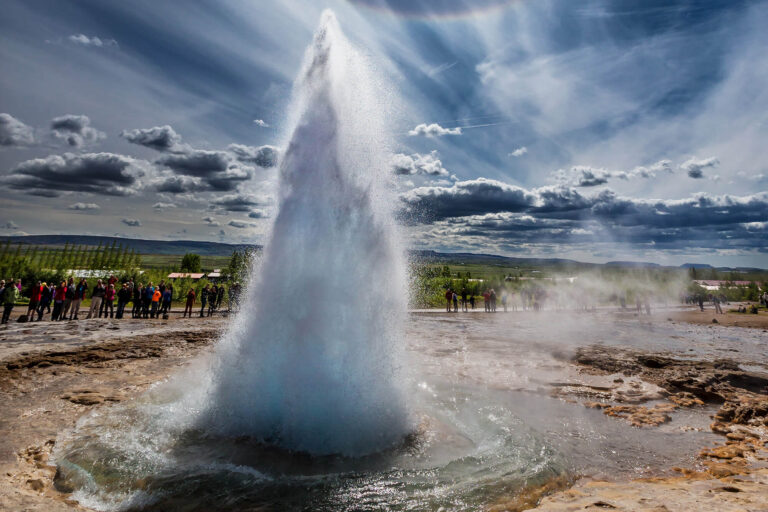
It was time to leave Thingvellir National Park, and head towards the gushing hot springs and bubbling pools at Geysir, which never fail to impress. Close by is the two-tiered waterfall of Gullfoss, which is another ‘must-see’ on the Golden Circle trail (which encompasses Thingvellir, Gullfoss and Geysir). A rainbow through the mist made for terrific photographic opportunities. Torfi pointed out where the Drumbo Base Camp is located; the centre for the rafting (which is how Torfi started out in the adventure activities business), and the coach headed south east, towards the coast. At Seljalandsfoss waterfall it was possible to walk behind the cascading torrent of water, which tumbles down over a former sea cliff – a very unique and slightly damp experience! Then it was on to Hotel Hofdabrekka, just outside the village of Vik, for an overnight stay (accommodation in twin and single rooms). Hosts Bjorgvin, Halla and their family had prepared a sumptuous buffet dinner, including salmon, salad, lasagna, chicken, lamb, white fish and even sushi! Despite a long and fulfilling day, some of the group stretched it out even further, with a dip in the hotel’s hot tubs until the wee small hours!
DAY 3: Tuesday 5 June 2012
Overcast skies greeted the group this morning (rain clearly moving northwards from the UK!) and a photogenic start to the day at the basalt columns at the sea cliffs of Reynishverfi – a popular spot for the obligatory school group photo, and a great place to learn about geology. At the glacier Solheimajokull Torfi and Asdis helped everyone put on their crampons, and distributed harnesses, hard hats and ice picks, together with a clear and detailed review of the safety briefing and procedures for school groups. This was just a 45 minute taster, as more time is usually spent observing the moulins and crevasses of the glacier; one of the most popular activities for study trips. Following the descent from the ice it was on to another waterfall at Skogafoss, for a short walk up to the falls and Asdis pointed out the possible walks from here. The Eyjafjallajokull Visitors’ Centre on the south coast is the brain-child of the people at Thorvaldseyri; a farm that was covered in ash following the eruption of April/May 2010. In typical resourceful Icelandic fashion, the farmers have turned the situation around, and created a wonderful exhibition to the eruption, offering a poignant insight into their experiences living in such a potentially hostile environment. It was great for the group to pay a visit here; a highlight of any study trip itinerary. Another ‘must’ for non-vegetarians, is a taste of Icelandic hot dog, which is a surprising culinary delight! Addy obliged in making this possible with brief drive-by at the tiny village of Hvolsvollur (home of the best Icelandic hot dog factory), where a stop was made in one of the many garage kiosks. Duly fuelled, it was on to the foot of Mount Hekla; the top of the volcano now visible after the clouds had lifted. Trudi and Addy had planned for horse riding at Eldhestar, and an early evening ride allowed everyone to experience the unique ‘tolt’ gait unique to the pure-bred Icelandic
horse. Addy herself is quite a horsewoman and explained about the culture of horses in Icelandic society, and how the breed is kept pure by allowing export but no import of equine animals. Trudi is definitely not a horsewoman but was given a very patient old horse and really enjoyed it!
Then it was on to the lovely Vatnsholt for the last night's stay (again, in twin and single rooms). The group was greeted by hosts Johann and Margret, as well as several dogs, and a pig-that-thinks-it’s-a-dog called ‘Ham’ – all part of the charm of such a wonderfully friendly and slightly eccentric Icelandic accommodation! Speaking of which (!), host Johann gave a delightful insight via a slideshow over dinner, of how the farm has developed over the years, including a slight diversion onto pictures of his beloved pet raven and fox cub! The slideshow was accompanied by yet more fantastic food in the form of a 3-course meal to end an action-packed day.
DAY 4: Wednesday 6 June 2012
The last day of the Iceland Teacher’s Inspection Visit already! Heading west from Vatnsholt and it was time to stop at Hveragerdi for a snack of a boiled egg and rye bread cooked in the geothermal hot springs. Things were shaken up a bit at the earthquake simulator, which gives a tremor of around 6.6 on the Richter scale! It’s great fun for the students, and there is also a model kitchen and videos showing footage of an earthquake, which really helps to bring home Iceland’s position on the Mid-Atlantic Ridge. Back into the capital area the opportunity to enjoy the view from Perlan; an ingenious building which houses hot water tanks supplying Reykjavik. The large 3-D relief of the whole island which is on display at City Hall would be a great spot for students to discuss their itinerary either at the start or end of a trip. Lunch was at the Backpackers Hostel just off the main Laugavegur shopping street, where Addy and Trudi produced a ‘treat’ of fermented shark, dried fish and the Icelandic schnapps, Brennivin (known as
‘Black Death’)! A short walk up to the iconic church Hallgrimskirkja to meet the coach, and it was time to depart Reykjavik. Hafnarfjordur is a lovely town located between the capital and Keflavik International, and is a friendly and picturesque alternative for groups, so a drive-through on the way to the airport allowed teachers to get an overview of the possibilities of accommodation here. Arriving at Keflavik at 14:00, it was time to check-in for the as-ever punctual Icelandair flight home.
Feedback from teachers on this trip shows that it was a very worthwhile, rewarding and informative visit, as well as being rather enjoyable! If you’re thinking about a study trip to Iceland, or indeed any of our destinations, please get in touch with us to find out about a possible place on a Teachers’ Inspection Visit.
Read on to find out what the group said about their time in Iceland:
What a shock to the system coming back to persistent rain and flooding! I had a fantastic time with you and the rest of the gang. A wonderful insight into the wonderful world that is Iceland. Getting through so much in such a short period of time was very helpful and I was amazed at the depth of the experience too. The guides were brilliant! Nothing I would change apart from maybe a few more hours on the day to get a little more in :-)
Phil, Dulwich Prep London
Hi Addy - the trip was absolutely fantastic and really valuable for me to have first-hand experience of much of what we are all going to do in July. I do want to make 2 small changes to our itinerary as a result of it. One is for us all to go to the cinema in Reykjavik to see the Iceland film on the 2nd night and the other is to build in a short visit to the volcano museum by the Farm (near Skogar) where we saw the short film about the 2010 eruption which was great. Apart from that I really think you did a fantastic job giving us experiences and a taste of many different options and accommodation levels that you offer and for that I can't thank you all enough. I am still tired out and recovering after nearly a week!! But I can’t wait to be back in Iceland in a month!! Many Thanks.
Frazer, John Kyrle School, Hereford
THANKS SO MUCH! Brilliant time and we both really appreciated your kindness to us both. It was also so useful to see the accommodation and the equipment/activities etc. The egg boiling was great fun and I think the kids might enjoy that! We'll fill out the activities sheet as soon as possible.
Once again, thanks for such a great trip. Felt I achieved something!! Thanks for the photo too!
Best wishes,
Trish and Nick, The Red Maids’ School, Bristol
Dear Addy
Thank you so much for all you work organising and running the trip last week. I had always wanted to visit Iceland but could never convince my non-geographer husband to come with me! I did so many things that I have always wanted to do! Thank you.
Alex, Invicta School, Kent
Hi Addy and Trudi,
Thanks again for an excellent inspection visit. I felt the balance of seeing the sites and experiencing the activities was spot on and that the itinerary achieved all that could be reasonably expected, compressed into a 4 day /3 night trip. Kind regards,
David, Churchers College, Hampshire
Addy,
Just a brief note to say a big thank you for your help/guidance on the inspection trip. It was really useful to finalise thoughts/ideas of what we can and cannot do. I had a very enjoyable time, as i think most people did. I know there are lots of people who want to keep in touch and exchange photos etc. Thanks again.
Gary, Queen Elizabeth Grammar School, West Yorkshire
Hi Addy,
I hope you had a nice stay after we all came back to rainy England!! Myself and Helen had the most amazing time and cannot wait for our pupils to experience it too. The trip was perfect! Everything was organised so well and it was great to see the range of add ons that we can do. Hopefully we may try and fundraise for the caving! It was very hectic but totally worth it. Wouldn't change anything :) Will be in contact soon! Thanks for the pic :)
Marie, St Edmund's School, Hampshire
Hi Beverley,
Oh my goodness, I cannot speak highly enough of the guides and experience that I had in Iceland! I am absolutely blown away and cannot wait to take the kids back next Easter!Thanks,
Amy, Pontarddulais Comprehensive, Swansea
If you've been inspired by the kind words of the group above, we'd be happy to talk to you about a study trip to Iceland, or about a place on a Teacher's Inspection Visit. Do get in touch with our specialist Schools Team!
Posted on June 18, 2012 in Geography , Geology , Geysers , glaciers , Iceland , Science , Study Trips , Travel Stories , Volcanoes , Volcanos , Waterfalls | Permalink | Comments (0) | E-mail this
Today is Norway's National Day
Today's the day to celebrate with our Norwegian friends as they mark their National day.
Many celebrations take place throughout Norway with children's parades and festivities taking place the length and breadth of Norway. The bands start early so you could be woken to the sound of a marching band to start the festivities and all the communities come together to celebrate their independence.
Pupils in the last year of secondary school make a huge contribution to the celebrations. They are called "russ", are dressed in red or blue costumes, and spend the whole of May celebrating. They have their own parades, with buses and vans with loud sound systems. Ask them for a "russekort" and you will get their personal sixth former card, with personal info and jokes on it.
If you would like to meet the locals and see the amazing geography that Norway can offer your students then why not take one of our Norwegian Study trips.
Posted on May 17, 2012 in Geography , Norway , Study Trips , Travel Stories | Permalink | Comments (0) | E-mail this
Discovering Morocco with the Geographical Association
The Geographical Association's Dorcas Brown travelled with us to Morocco in February, together with a group of geography teachers. You can read all about her impressions of this amazing country in the GA Magazine, which is arriving on doorsteps now! If you're not already a member of the GA, find out more about joining on their website.
The article is also available for viewing on our website. Dorcas also asks the question 'why Morocco?', looks at issues and solutions for launching a study trip there, and offers reviews and advice on hotels (and tents!), currency, food, language and other facilities.
If you're interested in following in Dorcas' footsteps with a school trip to Morocco, or would like to visit on a Teacher Inspection Trip in 2013, please get in touch with our Specialist Schools Team.
Posted on May 14, 2012 in Geography , Geology , Morocco , Study Trips , Travel Stories | Permalink | Comments (0) | E-mail this
Today's earthquakes follow Mid Atlantic Ridge in Iceland
One of the first things I do each morning is to check the earthquake activity in Iceland. And today I found a very interesting pattern that I wanted to share - not that there is anything sinister about it - just a mirror image to the mid-atlantic ridge. So I thought I would share it with you courtesy of the Iceland Weather service who host the information.
The Iceland weather service hosts information on earthquakes in Iceland and tracks activity. Before the volcanic eruption of Eyjafjallajokull in 2010 the pattern of earthquakes changed significantly.
For FREE ONLINE STUDY AID on Eyjafjallajokull that won the coveted Silver GA award please sign up here.
Posted on May 11, 2012 in Earthquakes , Geography , Geology , Iceland , Science , Volcanoes | Permalink | Comments (0) | E-mail this
Life on Fire - Volcanoes up close and personal!
Can’t wait for this …
Starting on the 9th May, Eden is showing a new series "Life on Fire". Narrated by Jeremy Irons this offers a close up view of the impact of living around the volcanoes for humans, animals and plants.
The programme makes use the most up to date technology – high speed HD cameras,
and an impressive zoom that allows viewers to get 85 times closer to any object, without pixilation.
Working closely with respected researchers and volcanologists, the production company was granted immediate access to the latest information on eruptions across the world, allowing unprecedented coverage of some of the most spectacular and powerful forces on the planet.
The sky plus is going to go on overtime for this one.
If you would like to see the impact of living with a volcano close to home then why not join us on a study trip to Iceland, Bay of Naples and Vesuvius, Sicily and Etna or even a long trip to New Zealand to see Ruapehu!
Posted on May 3, 2012 in Bay of Naples , Geography , Geology , Iceland , New Zealand , Sorrento , Study Trips , Volcanoes | Permalink | Comments (0) | E-mail this
Stretch Your Horizons and win a trip to Iceland!
Have you signed up to the Stretching Horizons Conference?
If you are as passionate about field trips as we are then this is something not to be missed!
Stretching Horizons is an event where trip organisers can get the latest information on field visits. With a host of industry experts and teachers offering inspiring seminars and advice, you can pick and mix your conference experience and tailor it to your needs. You will also find leading educational tour operators and youth expedition providers, tourist boards, trip support specialists, kit suppliers and more. Whether you are experienced at arranging overseas educational visits or a complete novice, this is one professional development conference you cannot afford to miss.
As supporting sponsors of the event, you can meet with the Discover the World team. If you are a teacher, enter our competition at the event and be in with a chance to win a trip to Iceland.
Posted on April 26, 2012 in Geography , Iceland , Study Trips , Travel Stories , Volcanoes | Permalink | Comments (0) | E-mail this
The longest geographical name in the world!
And some thought Eyjafjallajokull was hard to prounounce!
The longest geographical name in the world is:
Taumatawhakatangihangakoauauotamateaturipukakapikimaungahoronukupokaiwhenuakitanatahu.
It is a hill in New Zealand, a maori phrase which translates to “place where Tamatea, the man with the big knees, who slid, climbed and swallowed mountains, known as land-eater, played his flute to his loved one." New Zealand is full of geological wonders! What better place to experience a school trip of a lifetime!
http://www.discover-the-world.co.uk/school/trip/en/destinations/new-zealand/index.html
Posted on April 26, 2012 in Geography , Geology , Geysers , glaciers , New Zealand , Science , Study Trips , Volcanoes , Waterfalls | Permalink | Comments (0) | E-mail this
Free resource for Geography Teachers wins Silver at GA Conference
We were delighted to receive a silver award for our Eyjafjallajokull Study Aid at the GA Conference in Manchester last week, and felt it only fitting that David Rogers collect it! (co-author Simon Ross had the very good excuse of being in Iceland at the time!). Photo credit (left): Bryan Ledgard/Geographical Association.
We have a limited number of free Volcano Study Aid posters, so order yours asap! And don't forget you can request a free sample of volcanic ash from the infamous Eyjafjallajokull, which is bound to inspire your students. Register online for the FREE Eyjafjallajokull Study Aid. If you want to find out more, check out a video of David Rogers' session on this invaluable resource at the GA Conference on Saturday.
If you have any feedback on the Study Aid, or would like to contribute to it, we'd be delighted to hear from you. Just give us a call or drop us a line.
Posted on April 18, 2012 in Geography , Geology , glaciers , Iceland , Science , Study Trips , Volcanoes , Volcanos | Permalink | Comments (0) | E-mail this
Iceland's volcanoes to potentially power the UK
There's a fascinating article in the Guardian newspaper today, about how Iceland's geothermal energy could well provide power to UK homes in the future.
Charles Hendry, the UK's Energy Minister, is set to visit Iceland next month to discuss tapping into Iceland's natural geothermal power source, something that the Icelanders are expert at. He has already reviewed the proposal with the head of Iceland's national grid. "We are in active discussions with the Icelandic government and they are very keen," Hendry told the Guardian. In reality, the cable between the two countries would have to be 1,000 to 1,500km long and by far the longest in the world - a mind-boggling idea!
The Icelandic talks are all part of a grand government scheme to reduce the UK's dependence on fossil fuel importants, and meet climate change target through sourcing clean, reliable energy.
There are many locations in Iceland where your students can witness the harnessing of geothermal power first-hand, from Reykjavik's Perlan (which supplies natural hot water to the whole capital area), the power station at Hellisheidi, to the greenhouse village of Hveragerdi - this 'hot topic' (excuse the pun!) is brought to life on a school trip to this amazing country. Take a look at some suggested itineraries on our Schools Discover website and contact our team of educational tours specialists to start planning your trip today.
Posted on April 12, 2012 in Geography , Iceland , Science , Study Trips | Permalink | Comments (0) | E-mail this